- A.J. Croce Presents CROCE PLAYS CROCE:
- AHA! Sing It Out!
-
The Billie Holiday Project
- Branford Marsalis Quartet
- British Beat: The Legends of 60s British Rock
- Chaplin
- Christopher Cross
- Donavon Frankenreiter
-
Doublewide KingsBenefit Concert for the More Mesa Preservation Coalition
- Drew & Ellie Holcomb
- ft. The TEC Band ELVIS: In Person Starring Matt Stone
- Elmer Gantry
- Gerald Clayton Trio
- Hats Off, Boots On
- Jim Messina
- John C. Reilly is Mister Romantic
- Journey USA
- Journey through Jazz
- Opener: Oakland Rain Judy Collins – Sweet Judy Blue Eyes: Farewell Tour
- Julian Lage Quartet
- Lahaina: Voices of Change
- Lizz Wright
- The Magical Music of Motown
- Nerf Herder
- Opera Santa Barbara 26-27 Season
- Pat Metheny
- Prime Time Band Spring Concert: Legendary Movie Music and More
- Richard Thompson with Zara Phillips
- Riders of the Purple Sage
- Rigoletto
- The Rush Tribute Project
- Sam Grisman Project
- Santa Barbara Symphony Youth Ensembles
-
Flamenco Arts Festival GALA Performance
SIUDY GARRIDOFLAMENCO COMPANY
- 2026 Spirit and Junior Spirit of Fiesta
- The Barber of Seville
- Trae Crowder
Related Posts
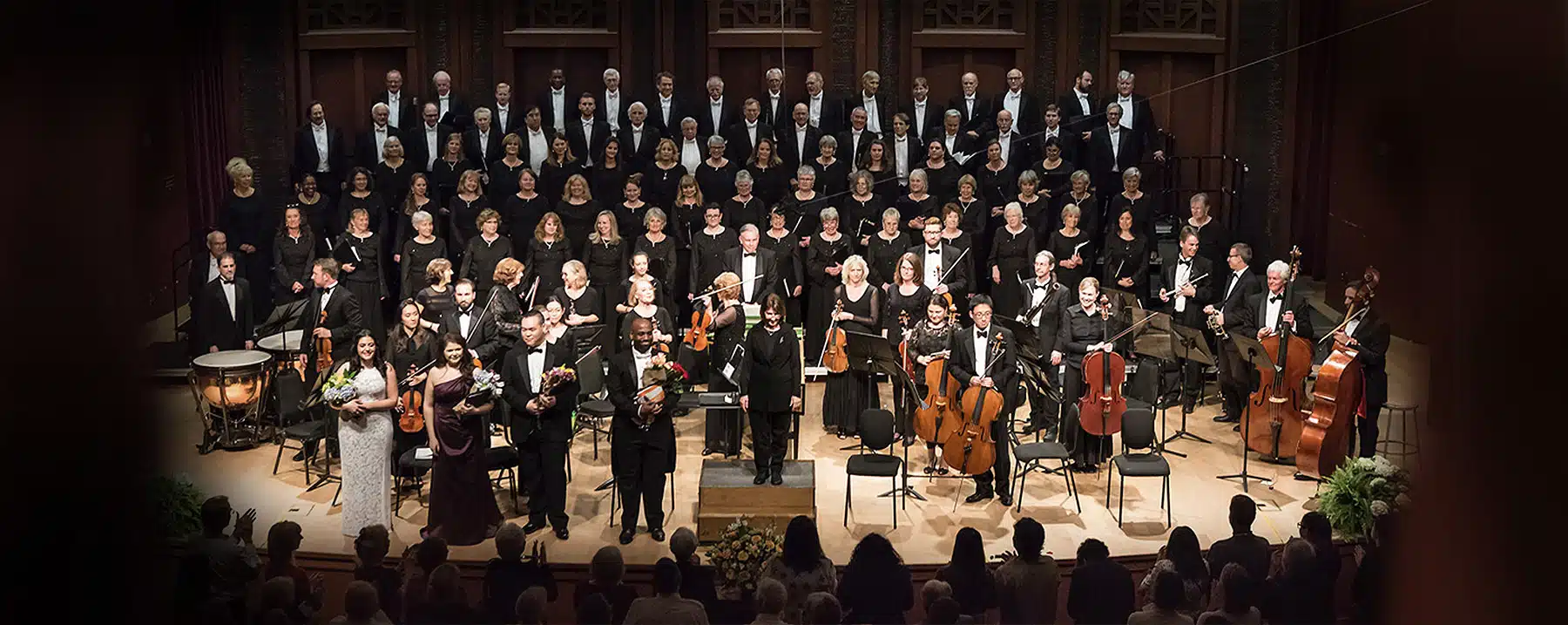
Their vision is to elevate appreciation for the beauty and power of choral music through inspiration, excellence, and passion.

The Choral Society was formed in 1948 at Oak Park, following a performance of Elijah! – an oratorio by Felix Mendelssohn – at the Lobero Theatre, and has been making magnificent music since. Conducted by Jaffrey Harris, the group included 32 sopranos, 19 altos, 7 tenors, 2 baritones, and 4 basses.
It is now a semi-professional community chorus, approximately 80 singers strong from a wide range of age groups, drawn primarily from Santa Barbara County, as well as the greater Los Angeles area.

Photo by David Bazemore
Members perform a minimum of three concerts per season, often appearing with a full professional orchestra, and have the opportunity to sing both in the region and internationally. Audiences enjoy the benefit of a diverse repertoire, from great classical masterpieces to contemporary choral works and popular pieces, which often give voice to the human experience through new forms of musical expression.

Photo by David Bazemore
Thrilling collaborations with other arts organizations – such as State Street Ballet, the Santa Barbara Symphony, and Opera Santa Barbara – not only enhance and expand the reach of performances, but also inspire and energize both singers and audiences. The level of musical excellence and exceptional programming are what keep bringing patrons back.
The Hallelujah Project 8, performing at the Lobero on December 10-11, is the first concert of The Choral Society’s exciting 75th Anniversary Season. This season also marks Artistic Director/Conductor Jo Anne Wasserman’s 30th year with The Choral Society.

Photo by David Bazemore
Their first Hallelujah Project family holiday concert was introduced at the Lobero in 2013, with T’was the Night Before Christmas narrated by author/comedienne Fannie Flagg (Fried Green Tomatoes), accompanied by an orchestra, and a special visit from Santa.
This became the beginning of what is now an annual holiday tradition at the Lobero. The audience-friendly program also includes a guest appearance of children from The Music Academy’s SING! Program. Reading the Christmas story this year will be Scott Reed, President and Chief Executive Officer of The Music Academy.

Photo by David Bazemore
The Lobero has become like home to The Choral Society – a strong part of Santa Barbara cultural life, a welcoming place the community can still count on to honor family-friendly traditions. Performing on such an intimate stage makes them feel at one with audiences, who become enveloped in the melodious sounds.
This year’s celebratory season has something for everyone – from October’s impressive Carmina Burana collaborative revival to the grand finale Oak Park 75 picnic on June 28, with current and former singers, friends, and families coming together to celebrate this milestone anniversary.
Tickets for The Hallelujah Project 8 are available at: https://www.lobero.org/events/hallelujah-project-8/. For more information about The Choral Society’s 2022-23 season, please visit: sbchoral.org.
Sources
Related Posts

Joshua James – Multidisciplinary Artist
By Anne Wilde on January 31, 2025
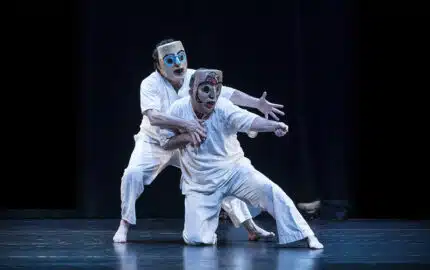
BOXTALES Theatre Company Celebrates 30th Anniversary
By Anne Wilde on March 8, 2024
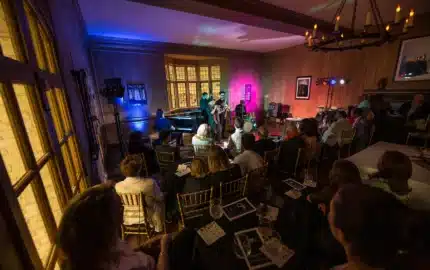
Jazz at the Ballroom
By Anne Wilde on November 15, 2022
Celebrating 50 Years!
This dynamic women’s auxiliary group is passionate about the Lobero and views our historic theater as a community treasure.


This year, The Lobero Theatre Associates celebrate their 50th Anniversary! Their mission is to aid the Lobero financially in whatever way they can to help keep this architectural and cultural jewel vibrant for future generations. Associates can also be found at the theater in a variety of other roles, such as volunteering for a committee, ushering, decorating for an event, or hosting a luncheon. Established in 1972, The Associates have raised more than a million and a half dollars for the Lobero over the last five decades.
It’s thanks to their stellar partnership that patrons can enjoy improvements to the Lobero’s courtyard, a new ticketing system, the Steinway grand piano, an updated ladies’ restroom, beautiful holiday décor on the esplanade, replacement of our historic theater’s beloved curtain, youth outreach programs, and so much more. The entire arts community benefits from the work of these ladies and we are very grateful for their passion and dedication. The Associates hold a Board Seat on the Lobero Theatre Foundation and the Associates’ President attends meetings.
The group, with a current membership of approximately 50 ladies, welcomed 5 new members this year. The fun, diverse group of women ranges from moms with young children to grandmothers, working women, and retirees. These fabulous fundraisers are always open to new members who would like to help make a positive impact on the Lobero. Two levels of membership are available – Active Member, if one has time to attend monthly meetings, or Mini Member, who is involved more casually.
Either way, all members have access to exciting top notch social events, such as the lovely annual signature Holiday Tea each winter, the Hats Off Luncheon each spring, the New Membership Luncheon, The Associates’ Night Out, and more. The events are hosted around town at various venues, such as Margerum, Santa Barbara Yacht Club, La Cumbra Country Club, Santa Barbara Club, Fieldside, the Lobero’s courtyard, or at the home of a generous individual on a committee who offers to host a luncheon.
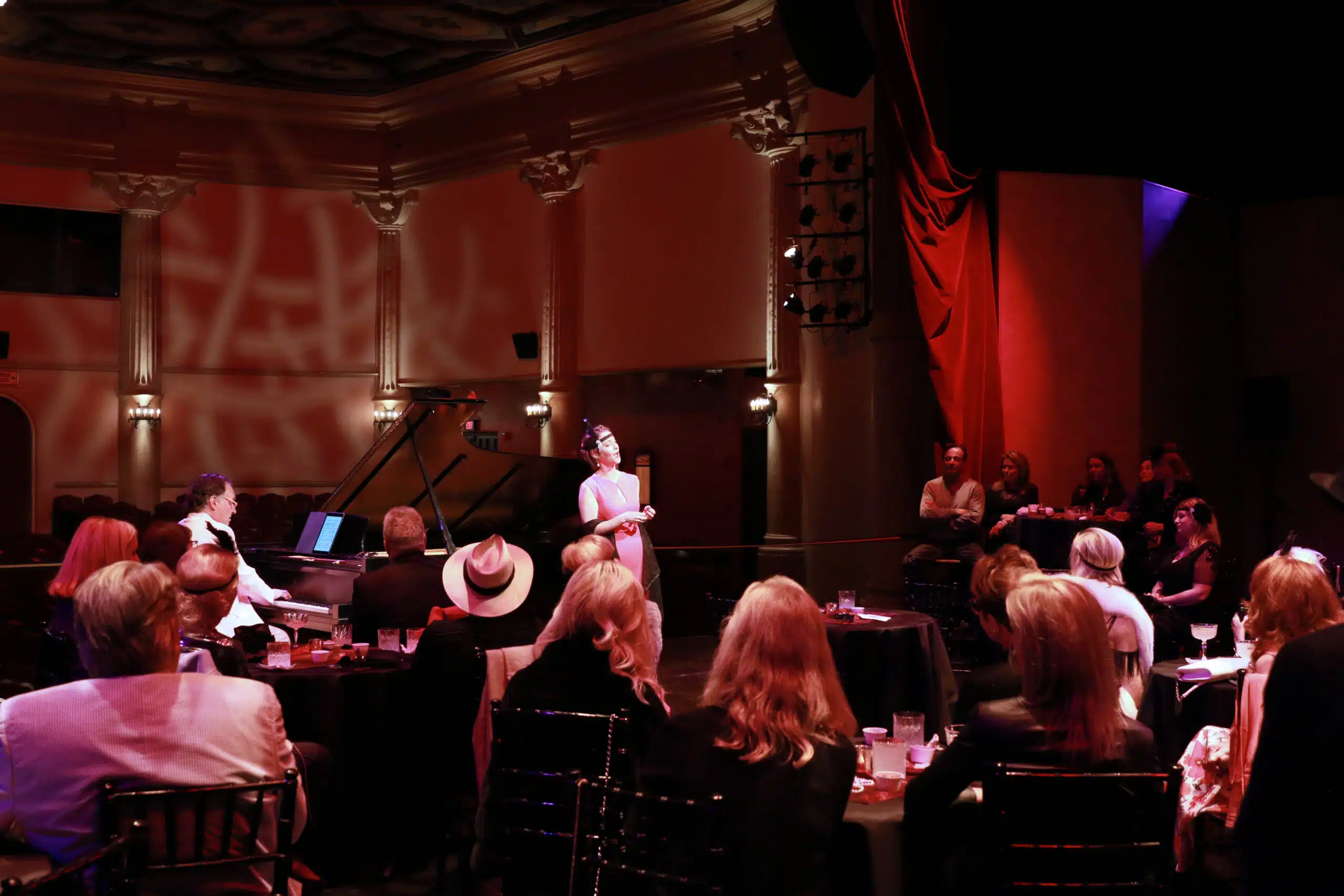
In lieu of hosting their traditional “Hat’s Off Luncheon” fundraiser this year, The Associates organized “Curtain Call” – a festive speakeasy soirée on the Lobero stage itself, in April 2022, to raise money to replace our historic theater’s beloved curtain. Guests donning Gatsbyesque garb enjoyed artisanal craft cocktails and tasty hors d’oeurvres, while being serenaded by enchanting soloist Jana McIntrye, accompanied on the piano by Kostis Protopapas, Artistic Director of Opera Santa Barbara. In the end, co-chairs Janet McCann and Danielle McCaffery successfully achieved their goal to host a lucrative fundraiser, surprise fellow Associate Hope Kelly with an endearing covert tribute, provide first-rate entertainment, and have a blast.
To celebrate their 50th Anniversary, The Associates organized an exclusive delectable wine pairing dinner upstairs at Margerum Tasting Room (at Hotel Californian) on June 22nd, which sold out and was met with great enthusiasm. The upcoming Associates’ Holiday Tea, co-chaired by Leslie Haight and Emily Johnson, is planned for December 6th at the Santa Barbara Club, featuring sweet and savory English Tea delicacies, classic champagne flutes, and esteemed Swedish pianist Fredrik Rosvall tickling the ivories. What a wonderful way to kick off the holiday season and introduce new guests to this delightful annual tradition!
For more information on how to become a member, please contact Sheila Caldwell at the Lobero Theatre Foundation.
Sources
Related Posts

DINNER & DIVOTS
By Anne Wilde on June 20, 2023
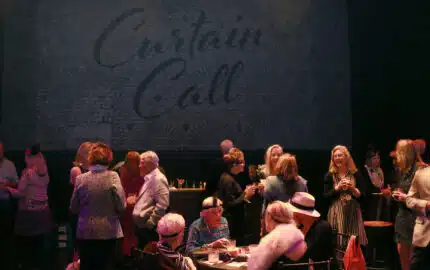
Bravo for Curtain Call!
By Anne Wilde on May 9, 2022

Introducing Janet McCann
By Cecilia Martini-Muth on September 30, 2015
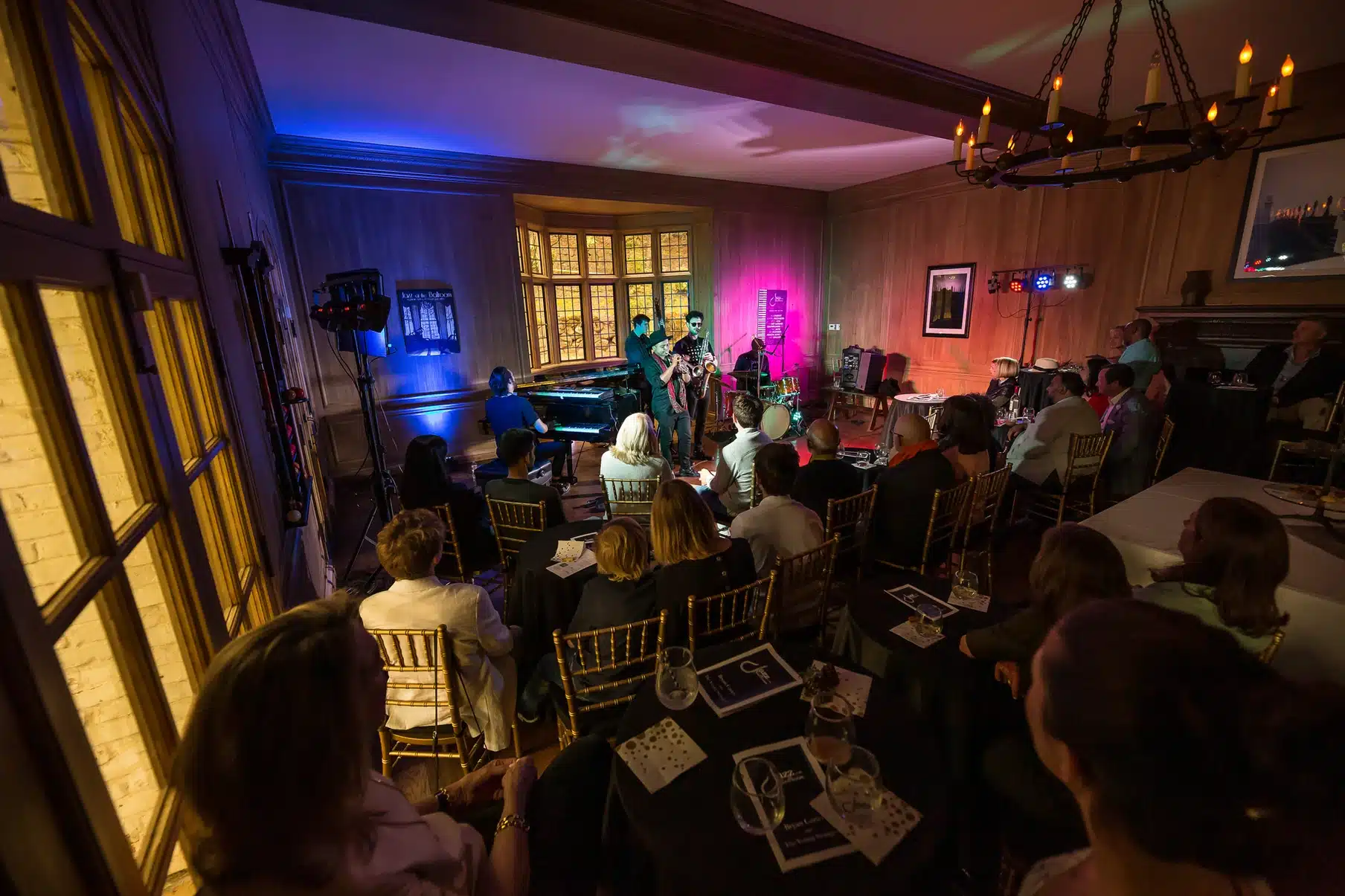
Spreading Joy with Jazz
Jazz at the Ballroom (JATB) is committed to keeping swinging, classic jazz thriving, sharing this extraordinary American art form with the greater public, and providing audiences with remarkable experiences.


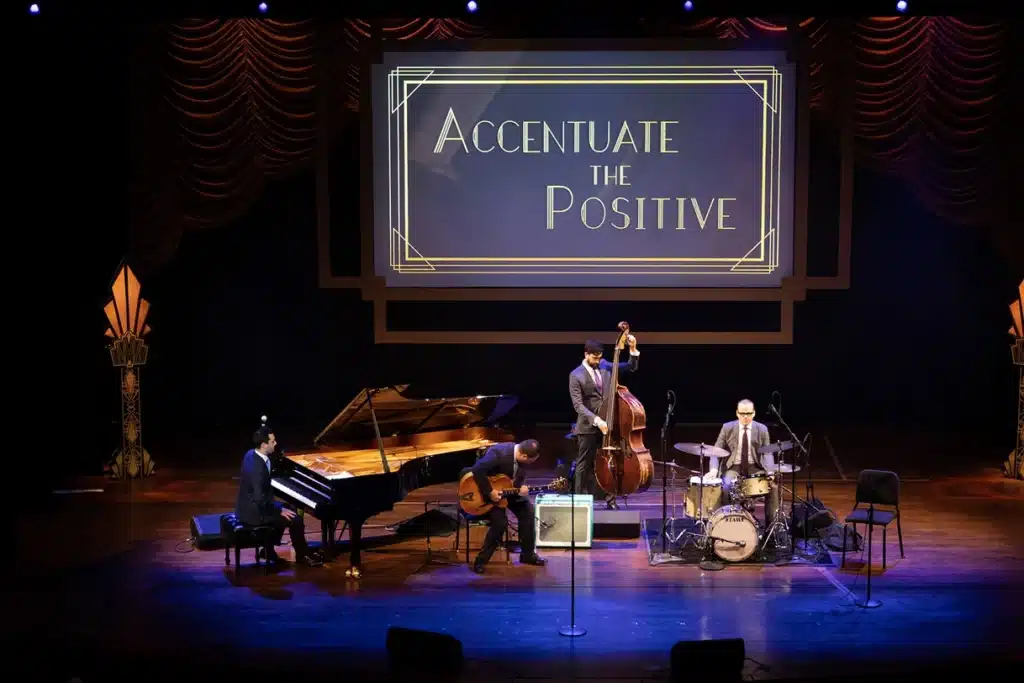
Tickets for Holiday “In” are available at: https://www.lobero.org/events/holiday-in/
For more information about Jazz at the Ballroom, please visit: jazzattheballroom.com
Executive Director Suzanne Waldowski Roche, who grew up in a family of jazz enthusiasts, established the non-profit organization in 2016 after moving from New York into famed movie star Bing Crosby’s former grand country manor in northern California.
An ardent patron of the arts, she brought new life to the estate’s grand ballroom by hosting some of the world’s most talented jazz musicians in an intimate, unique setting – from the legendary Freddy Cole to famous GRAMMY® winning trumpeter Chris Botti and The Hot Sardines.
Soon after, the shows grew in popularity through word of mouth, but as the space could only accommodate approximately 100 people, shows outside the ballroom were added, provided that the alternative venues were special, had some historical value, and added to the uniqueness of the concert experience.
That’s why the Lobero is the perfect location for this type of production – a place where multigenerational audiences can feel as if they are taking part in something timeless, one-of-a-kind, and memorable.
Focusing on the Great American Songbook and the ageless elegance the music embraces, Jazz at the Ballroom’s mission is to create an environment where every guest feels at home and each artist can share their stories, passion, and talent.
The first performance that JATB presented at the Lobero was Accentuate the Positive, in mid-September 2022, which took inspiration from Bing Crosby’s 1944 hit song of the same name.
The show celebrates the music that was the unofficial catalogue of tunes which kept Americans company through the highs and lows of the 1920s–1940s.
On Friday, December 2, Jazz at the Ballroom presents Holiday “In” – a hip twist on classic holiday tunes, hosted by comedian Dan Cronin, with bandleader Konrad Paszkduzki on piano.
Award-winning musicians from across the country take turns on stage for a show reminiscent of the old Christmas specials with Bing Crosby, Frank Sinatra, and other singing greats. The evening is a tip-of-the hat to Crosby’s classic film, Holiday Inn, and the past two years — when there was no place BUT home for the holidays.
Beyond their ballroom concerts, Jazz at the Ballroom also works to introduce, teach, and explore this incredible art form through their workshops, special events, and public concerts – keeping unforgettable jazz standards alive in our community and fostering a love of music in future generations.
- https://en.wikipedia.org/wiki/General_Tom_Thumb
- https://www.britannica.com/art/freak-show#ref1206212
- https://www.bbc.com/news/blogs-ouch-30034409
Related Posts
Joshua James – Multidisciplinary Artist
By Anne Wilde on January 31, 2025
BOXTALES Theatre Company Celebrates 30th Anniversary
By Anne Wilde on March 8, 2024
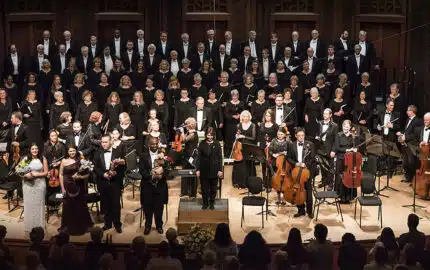
The Choral Society Celebrates 75th Anniversary
By Anne Wilde on November 22, 2022
Related Posts
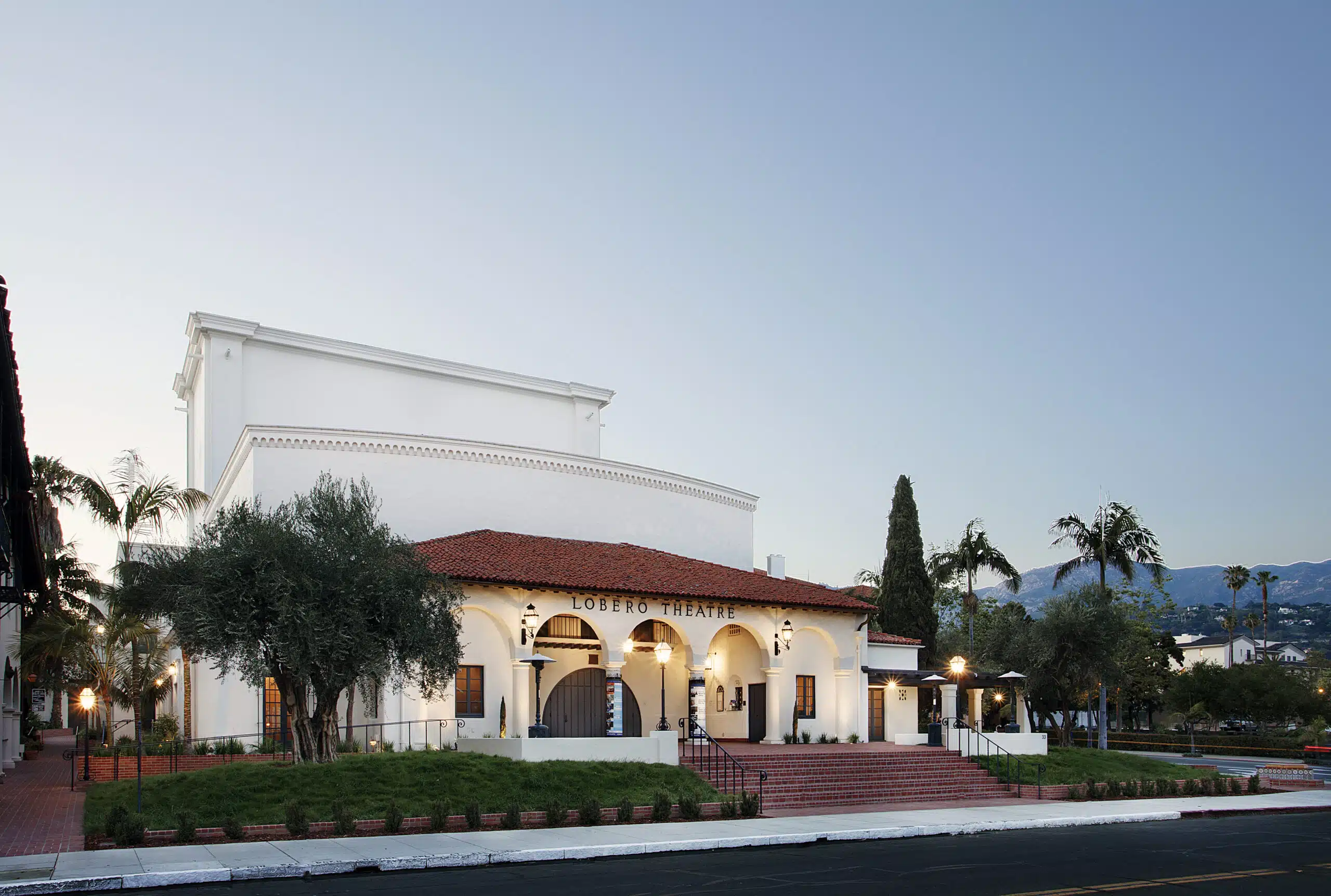
The Lobero Theatre will follow current local, state and federal health guidelines.
Please note that some artists may have specific audience requirements, which we will honor. Please see your event listing for more detailed information.
We encourage all patrons, regardless of vaccination status, to wear masks while indoors. Please do not attend if you have recently tested positive for COVID-19, or if you are feeling ill. Thank you for your cooperation.
Upgraded HVAC and Air Circulation
The Lobero has consulted with Mechanical Engineers to determine best practices and take extra precautions for the health and safety of our Lobero staff, artists, and guests. We have replaced the standard MERV 8 filters with all new, higher value MERV 13 filters specifically designed to eliminate circulation of airborne microbes; installed sterilizing UV light systems on evaporator coils to irradiate and kill airborne microbes in the duct work before they reach the general air supply, and we have reprogrammed our system to inject 100% fresh air while eliminating recirculation of inside air.
We thank the Santa Barbara community for supporting the performing arts while we work hard to follow the most up-to-date guidelines for the Covid-19 pandemic and keep our audience members, staff, and performers safe.
Please know we will continue to be responsive to the evolving situation and will keep ticket holders informed with any updates, and will make ticket exchanges or refunds available through the Lobero Box Office on a show-by-show basis.
We will continue to keep you apprised as quickly as we can of all scheduling changes. If you have any questions please call the Lobero Theatre Box Office at 805.963.0761 (Monday-Friday 10 AM-5 PM) or email boxoffice@lobero.org for assistance.
Additional resources and information about California’s COVID-19 mandates and regulations can be found here.
Related Posts
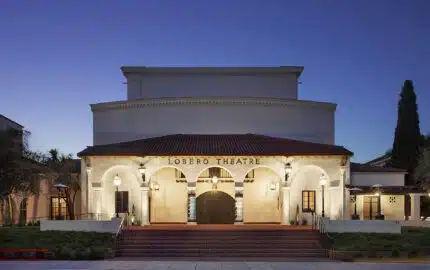
Lobero Named One Of The Most Beautiful Theaters In The World
By Anne Wilde on July 21, 2023
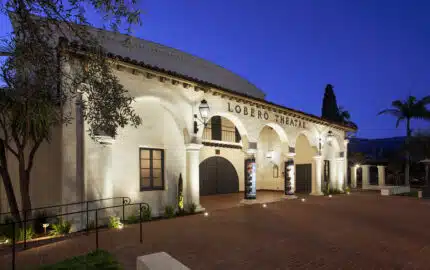
Announcing New Board President
By Anne Wilde on June 2, 2023

A Note from John Kay of Steppenwolf
By Lobero Theatre on May 20, 2020
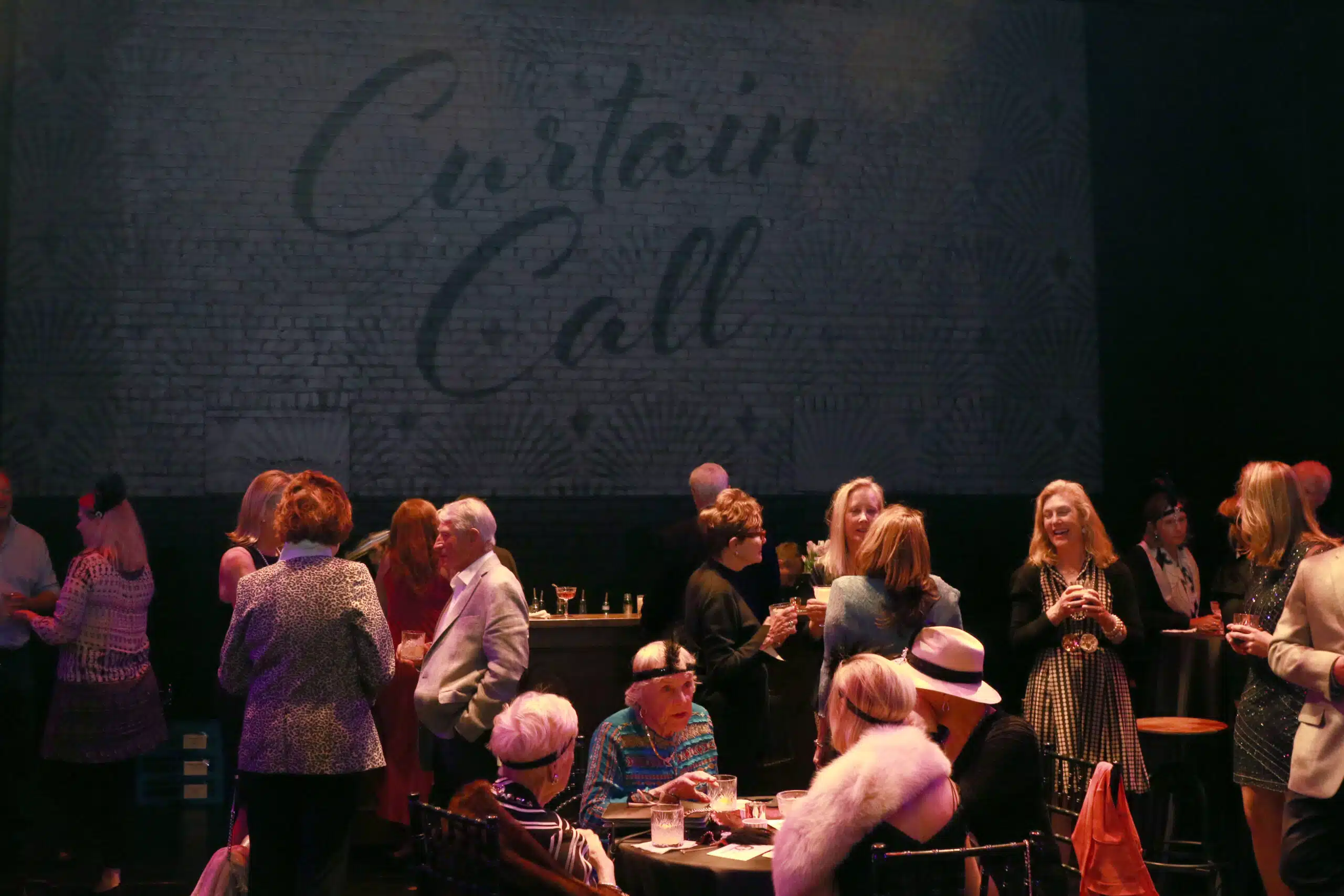
The Lobero Theatre Associates’ Curtain Call fundraiser, held on April 22, 2022, went off without a hitch.
Passionate about keeping our architectural and cultural jewel vibrant for future generations, the dynamic women’s auxiliary group has raised more than a million dollars for the Lobero over the last five decades.

It’s thanks to their stellar partnership that patrons can enjoy the Lobero’s courtyard, the Steinway grand piano, the updated ladies’ restroom, the beautiful holiday décor on the esplanade, and so much more.
This year, rather than hosting their traditional “Hat’s Off Luncheon” fundraiser, the Associates decided to plan several events to raise money to replace our historic theater’s beloved curtain.

Co-hosted by members Janet McCann and Danielle McCaffery, with the collaboration of Lobero’s dedicated staff, a festive speakeasy soirée was planned and Curtain Call was born. Given its rich history and theatrical ambiance, the decision was made to host the event on the Lobero stage itself.
A beguiling juice joint atmosphere was created utilizing artistic lighting design, with the theater’s red velvet curtain beautifully draped to set the scene. In addition, the evening included charming vintage décor by The Tent Merchant, along with tasty hors d’oeurvres from Savoir Faire, and impeccable bartending service provided by Pour Choices.

Guests, donning Gatsbyesque garb, entered through a private backstage door using a secret password, and were welcomed with festive flapper accessories, such as strings of pearls and dazzling headpieces.
The pièce de résistance was the artisanal craft cocktail menu, which included tempting specialty drinks, such as the Dollface French 75, Classy & Old Fashioned, Fizzy Flapper, and Millionaire Mule.

The evening’s entertainment featured enchanting soloist Jana McIntrye – daughter of fellow Associate, Lana McIntyre – who had performed in an opera at the Lobero last fall. The stunning soloist was accompanied on the piano by Kostis Protopapas, Artistic Director of Opera Santa Barbara.

But the highlight of the evening was an endearing covert tribute to a wonderful fellow Associate, Hope Kelly. At 93 years young, a member for 30 years, Hope has been responsible for sponsoring at least a dozen ladies as Associates, has hosted countless lunch meetings at her home and the Yacht Club, and is overall one of the most positive people on the planet. She was given a lovely silver frame, with a picture of her wearing one of her famous hats from a past Associates luncheon. At a later date, Hope will be honored with a plaque on the Lobero stage, when the new curtain is raised.
In the end, the co-chairs successfully achieved their goal to host a lucrative fundraiser, surprise Hope, provide first-rate entertainment, and have a blast.
This year, The Lobero Associates will be celebrating their exciting 50th Anniversary, and the Lobero is grateful for their remarkable passion and dedication.
Let’s raise a glass to the next 50 years!
Related Posts
DINNER & DIVOTS
By Anne Wilde on June 20, 2023

The Associates Golden Jubilee
By Anne Wilde on November 17, 2022
Introducing Janet McCann
By Cecilia Martini-Muth on September 30, 2015
Related Posts
Related Posts
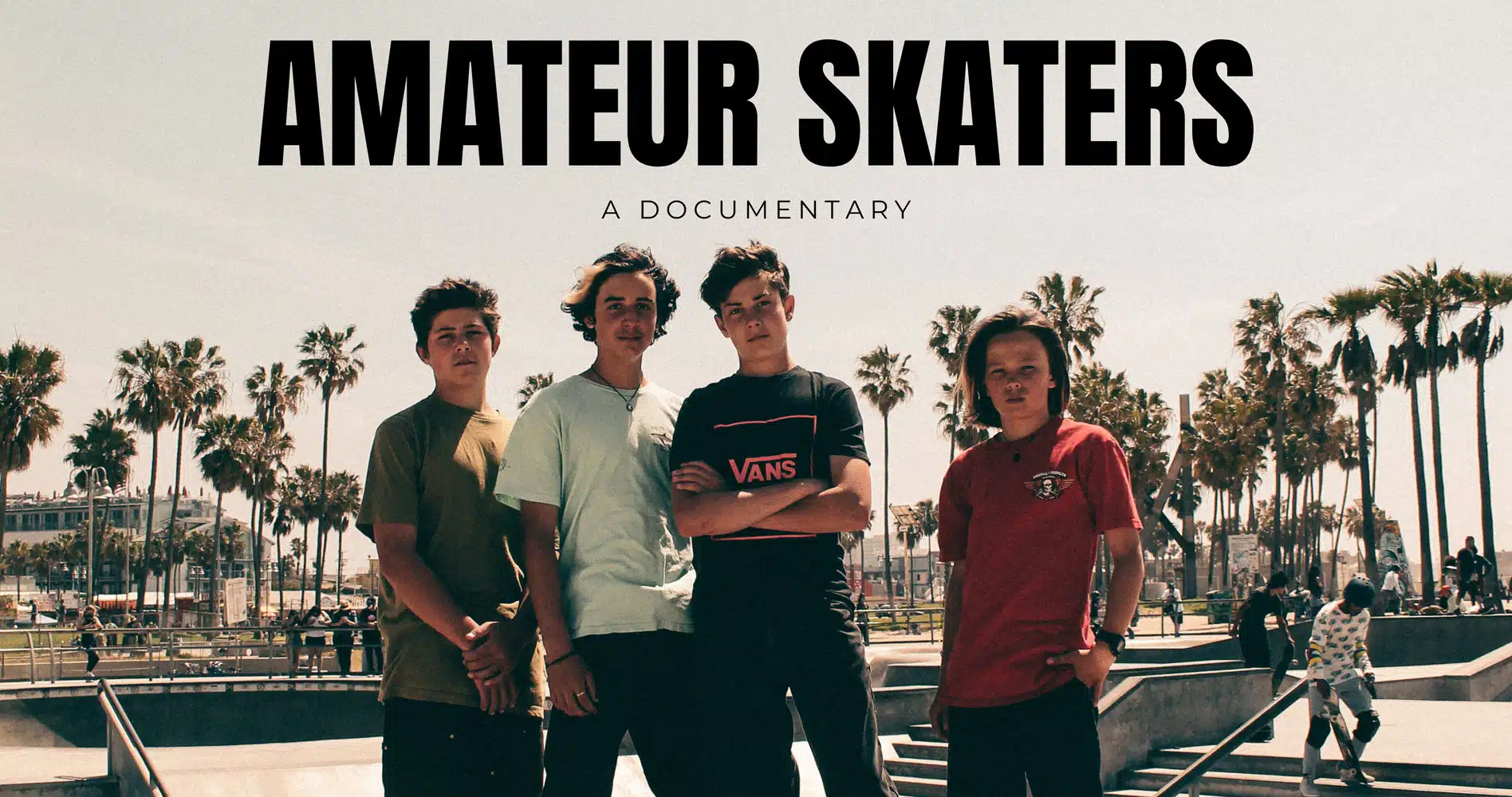
Interview with Amateur Skaters Director, Shemsu J. Lefevre
James Lefevre Studios presents the world premiere of Amateur Skaters at the Lobero Theatre on Friday, October 22, 2021 at 7 PM. The feature-length documentary, directed by fourteen-year-old Santa Barbara native Shemsu Lefevre, explores the world of skateboarding through the lens of four young skaters. Shemsu discovered his passion for filmmaking at the young age of eleven. Keen on learning the nuts and bolts of making movies, he checked out numerous college level ‘how to’ books from the library and eagerly began his endeavor. By twelve, the self-taught director made his first short film, which showed at one of the local festivals. With the support of his parents, he then went on to advance his skills by taking online master classes.

Although not a skater himself, Shemsu began filming his close skateboarder friends a couple of years ago with his iPhone at some of the nearby skate parks – with no idea that one day he would use these images to create a feature-length documentary.
After reviewing the collective footage several months later, he had a realization that this would be the perfect subject matter for his next project. His friends were quite enthusiastic about the concept and loved the idea of being part of such an inspirational venture. The narrative organically materialized, focusing on four amateur skaters pursuing their passion and sharing the physical and emotional obstacles they each experience along the way. Shemsu was drawn to documentary-style filmmaking and, as his skillset grew over the next year and a half of production, the young filmmaker incorporated the use of other cameras to capture more sophisticated footage.
The film features local skaters Kai Tautrim, Rowan Brownlee, Kahlil Aguilar, and Isaac Relis, along with an appearance by professional skateboarder Andy Anderson. The director’s goal is to spread awareness of the benefits of the sport – which builds valuable life skills, such as determination and focus, and exposes kids to cross-cultural interactions in community spaces and beyond. Skaters are persistent, creative, and determined to conquer the next trick and expand their repertoire.


After completing production, Shemsu launched a successful crowd-funding campaign to help with post-production and marketing. This young man wears many hats – musician (guitar, piano, cello), filmmaker, actor, and high school student. Growing up, he spent a lot of time at the Lobero, as his grandfather was quite fond of the theater. And the filmmaker himself performed on the Lobero stage in numerous productions throughout his childhood. So, it makes sense that Shemsu chose to present the world premiere of Amateur Skaters – red carpet and all – at our notable historic venue.
Related Posts

Spotlight on Artist Brad Nack
By Anne Wilde on July 26, 2023
Jazz at the Ballroom
By Anne Wilde on November 15, 2022

Busy Bees at the Lobero
By Cecilia Martini-Muth on June 22, 2020
Related Posts

On a cool March evening in 1976, an orange-robed, bearded man sat cross-legged on a wooden dais on the Lobero Theatre stage. Sri Swami Satchidananda was one of the West’s most well-known teachers of classical Yoga and, in 1969, had welcomed 400,000 young people to the Woodstock Music and Art Fair with an opening prayer.
By the mid-1970s, Satchidananda had moved to Santa Barbara, where he had created a Yogaville West community up on San Marcos Pass.

C. K. Ramaswamy Gounder (his family name) was born in southern India in 1914. As a young man, Ramaswamy worked in his family’s motorcycle import business. After his wife died only five years into their marriage, Ramaswamy left his two young children with his mother and embarked on a long spiritual pilgrimage through India. After years of wandering as an ascetic sadhu, begging for his food and studying with one teacher after another, he found a holy man named Swami Sivananda, who became his guru. In 1949, Ramaswamy was given the monastic name Satchidananda.

In the 1950s and early 1960s, Satchidananda was a hugely popular spiritual teacher across India. In 1965, the German-American artist Peter Max invited Satchidananda to visit New York. Max recalled the conversation. “Swami, America needs you very, very much. It would be really nice if you could come to America.” ‘America needs me?’ he asked. I told him that the youth were experimenting with drugs to expand their consciousness and the whole country was undergoing great change. His teachings of yoga were what we needed. Then the Swami told me, ‘Okay, if there’s a need, I’ll come.’”
In the 1960s, the average American knew little to nothing about yoga and meditation. A weekly PBS television show, called Yoga for Health with Richard Hittleman, started airing in 1961. But yoga only started to become widely known when the counterculture and New Age movements started to explore new lifestyles and world views – especially Eastern spirituality – in the late 1960s. As the “Woodstock Guru,” Swami Satchidananda played an important role in introducing yoga and meditation into Western popular culture.

From 1974 – 1978, when Satchidananda moved his winter headquarters to the Santa Barbara foothills, the Lobero stage became his favored public venue. Tickets to hear the Swami sold for $2.50 and his unprepared, humor-filled lectures focused on his system of Integral Yoga. Satchidananda described Integral Yoga as “a flexible combination of specific methods to develop every aspect of the individual: physical, intellectual, and spiritual. It is a scientific system which integrates the various branches of yoga to bring about a complete and harmonious development of the entire person.”
In late 1977, Satchidananda submitted plans to create an Integral Yoga Institute on 62 acres of land on San Marcos Pass, just above San Antonio Creek Road. The centerpiece was to be a 35-foot high, pink, nine-sided interfaith temple. Predictably, neighbors objected to the aesthetics of the structure and traffic impacts, and after several county hearings, the plans were withdrawn. Within a few months, Satchidananda moved his headquarters east to what became Yogaville East in Buckingham County, Virginia.
Additional Resources:
- New York Times – Swami Satchidananda
- Integral Yoga SF – About Our Founder
- Integral Yoga Magazine
- LA Times – Swami Satchidananda
- Telegraph – Swami Satchidananda
Related Posts
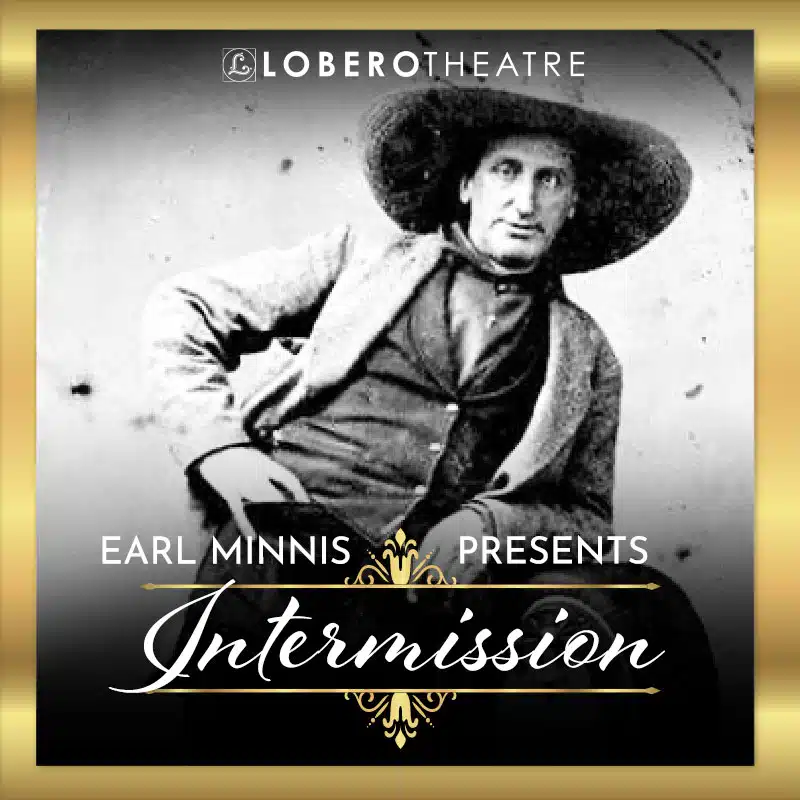
Jack Langrishe
By Brett Hodges on May 26, 2021

1938: Onstage on this Date
By Brett Hodges on April 1, 2021
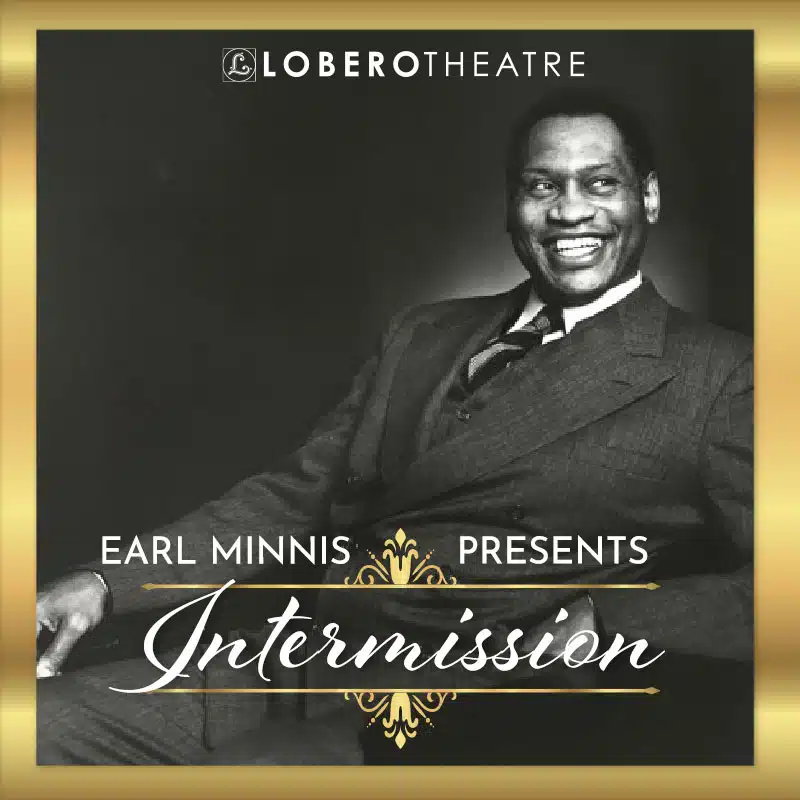
1931: Onstage on this Date
By Brett Hodges on February 23, 2021
In December 1869, José Lobero (born “Giuseppe” in Genoa, Italy) announced his plans to construct a grand opera house in Santa Barbara, even though the town had fewer than 3,000 residents.
Señor Lobero’s dream was not unique. With the prosperity that followed the Civil War, most small towns and cities in America also wanted an opera house.

On Washington’s Birthday in 1873, the Lobero Opera House finally opened, on the site of an old wooden schoolhouse at Canon Perdido and Anacapa streets. It featured a suspended horseshoe balcony and could seat 1,300. At the time of its opening, the Lobero was the largest adobe building in California and soon established itself as the cultural heart of Santa Barbara.
During that era, one of the most colorful theater impresarios and traveling entertainers was an Irishman named Jack Langrishe, popularly known as the “Comedian of the Frontier.” Jack was born in Dublin, Ireland in 1825, and emigrated to Boston when he was 20 years old. Within a few years, he was working in Boston taverns and theaters as an actor, comedian, and magician. In 1860, Langrishe and his actress wife Jennette saw an opportunity for touring entertainers in the western frontier, and his “Langrishe and Company” found a lucrative niche performing in mining towns in Colorado and Montana.
In 1876, Langrishe and Company arrived in Deadwood, South Dakota. Two years earlier, Colonel George Armstrong Custer had led an expedition into the nearby Black Hills and had found gold, setting off a wild gold rush which brought thousands to claim stakes on the Sioux-owned land. In 1876, Deadwood had grown to over 25,000 residents and was a lawless, violent town, but it was also a place that was hungry for entertainment.
Jack and Jenette Langrishe wasted no time in the thriving boom town, and they opened Deadwood’s first theater in July 1876. Just one week later, Wild Bill Hickok was murdered by Jack McCall in a neighboring saloon. An impromptu court was immediately called to order and the Langrishe Theater was requisitioned for McCall’s murder trial.
For three years, the Langrishe Theater was the center of Deadwood night life, with nightly vaudeville and minstrel performances playing to a packed house. Entertainers were sometimes paid in gold dust. Calamity Jane was a theater regular.
David Milch, the producer of the hit HBO series Deadwood, described Jack Langrishe as “a brilliant producer who made a fortune and, of course, lost every cent in hare-brained investments. He insisted every season on doing two Shakespeare plays, and invariably somebody tried to murder him during the performance because, strangely enough, Shakespeare wasn’t big in the mining camps.”
In September 1879, a devastating fire destroyed much of Deadwood, including the Langrishe Theater. Rather than rebuild, the Langrishes decided to take to the road. During an 1884 tour of the west coast, they arrived at the Lobero Opera House for a one-week run. Music for the performances was provided by the Santa Barbara Orchestra.
The Independent wrote, “The Langrishe troupe arrives today on the steamer, and will open tonight in Lobero’s Theatre. They deserve a full house.”
California audiences, including Santa Barbareños, loved Langrishe, and newspaper reviews were very positive.
The line announced on the bills, “A Whole Laugh Every Half Minute”, proved a literal truth, for it was one solid, undying, long-drawn burst of mirth, sometimes swelling into a roar, but never ending until the curtain fell, and the audience went home with aching sides.”
“Those who have not seen this company have missed a genuine treat, since they do not offer the trash generally considered good enough for us, but present good plays in an artistic and entertaining manner.”
Jack Langrishe retired from the stage in 1885. He and Jenette moved to Idaho, where he published a small newspaper, served as a state senator, and occasionally wrote plays.
Related Posts
1976: Onstage on this Date
By Brett Hodges on June 16, 2021
1938: Onstage on this Date
By Brett Hodges on April 1, 2021
1931: Onstage on this Date
By Brett Hodges on February 23, 2021
Death on the stage is as old as the history of theater. The ancient Greek playwright Sophocles famously depicted the on-stage suicide of the warrior Ajax, and melodramatic death scenes were commonplace in plays in the late 1800s.
But the real thing – actors who die during a performance – are as rare as they are shocking. One of the most famous, and ironic, real-life onstage deaths occurred at the Lobero on April 1, 1938.
Joseph Greenwald was born in New York in 1878 and grew up on Manhattan’s Lower East Side. As a boy, Greenwald was so enamored with the theater that he set up his paperboy box in front of a Bowery theater just so he could meet the actors and get to know the staff.

In his 30s Greenwald joined a repertory company, playing a different character each week. His salary was $25 a week and out of that, he had to buy his own wigs and costumes. In his first year as an actor, Greenwald played 38 roles. In 1926, at the age of 48, Greenwald got his first real break and joined the cast of the wildly successful comedy Abie’s Irish Rose. The play, about an Irish Catholic girl and a Jewish man who marry despite the objections of their families, was a huge commercial hit but was scorned by critics for reinforcing ethnic stereotypes. When asked to give his review of the play, Harpo Marx famously quipped, “No worse than a bad cold.”
Greenwald continued with Abie’s Irish Rose for a two-year tour of the English provinces and then stayed on to act in several shows on the London stage, including the prized role of Shylock in Shakespeare’s The Merchant of Venice. On his return to New York, he married a vaudeville comedienne named Lonnie Nace and continued with his busy career as a character actor in a number of Broadway plays.
In November 1937, the Clifford Odet play Golden Boy premiered on Broadway. Golden Boy was the story of a musically talented young Italian American named Joe Bonaparte who had to choose between his love of the violin and a lucrative, though a physically damaging career as a boxer. The play ran for 250 performances and was a financial and critical hit.
Several months after its successful Broadway run, Golden Boy was prepared for a West Coast tour. The actress – and future legendary acting teacher – Stella Adler was chosen to direct the play. Ms. Adler cast an up-and-coming young actor by the name of Francis Lederer for the play’s lead role of Joe. Joseph Greenwald was selected to play Mr. Bonaparte, Joe’s father. After several weeks of rehearsals in Los Angeles, Golden Boy was scheduled to open at the Lobero Theatre for a two-night “break-in,” before traveling to San Francisco.
Golden Boy’s West Coast premiere took place on April 1, 1938. The Lobero was sold out and the audience included a number of newspaper reporters who were eager to review the smash Broadway comedy. Working as the stage manager and minor actor (with only two lines) was the 21-year-old Glenn Ford. Ford would become one of Hollywood’s biggest stars in the 1940s and Golden Boy was only his second professional stage job. Ford recounted the night of April 1 in a biography written by his son Peter, Glenn Ford: A Life. “Actors are a very superstitious breed. So there was already a feeling of uneasiness among some in the cast. The curtain went up and everything went smoothly until the second act.”
It was at this moment in the play that Joseph Greenwald in the role of Mr. Bonaparte showed a friend an expensive violin he had just bought his son Joe.
BONAPARTE
My Joe gotta big talent. Yesterday I buy-a-him a present!
(With a dramatic flourish he brings a violin case out of the bottom part of a sideboard)
CARP (as the case is opened)
It looks like a coffin for a baby.
BONAPARTE
(looking down at violin in its case)
His teacher help me to picka him.
CARP (the connoisseur)
Fine, fine – beautiful, fine! A cultural thing!
BONAPARTE (touching it fondly)
The mosta golden present for his birthday which I give him tonight.
CARP
How much, if I’m not getting too personal, did such a violin cost you?
BONAPARTE
Twelve hundred dollars.
CARP (shocked)
What?
BONAPARTE
You’re surprised of me? I waita for this moment all my life.
After uttering the words “all my life,” Joseph Greenwald suddenly collapsed to the stage.
As reported by the national press, “The audience believed it to be part of the plot when Joseph Greenwald, a well-known Broadway character actor, collapsed last night as he said ‘all my life.’ But Greenwald’s collapse was genuine. He died of a heart attack. Not until members of the cast shouted for the curtains to be drawn did the audience know that Greenwald had been stricken.”
As Glenn Ford explained,
“I rushed onto the stage immediately. He was lying in the arms of one of the other actors. He was already dead. God, what an experience.”


The stunned audience was ushered out of the theater and their tickets were refunded. Golden Boy’s performance the following night was canceled, and the show was shut down for a week until another actor could be hired to replace Joseph Greenwald. His replacement turned out to be Lee J. Cobb, who had appeared in a different role in the Broadway production.
In 1939, Golden Boy was made into a movie starring William Holden as Joe and Lee J. Cobb as his father. In 1964, author Clifford Odets was lured out of semi-retirement and asked to write a musical version of Golden Boy specifically for Sammy Davis Jr.. And in 2013, a Broadway revival of the original play opened and was a critical hit, receiving 8 Tony Award nominations including Best Revival of a Play.
Sources
- https://www.newspapers.com
- https://timesmachine.nytimes.com/timesmachine/1938/04/02/98119092.html?pageNumber=15
- The Show Won’t Go On: The Most Shocking, Bizarre, and Historic Deaths of Performers Onstage
Related Posts
1976: Onstage on this Date
By Brett Hodges on June 16, 2021
Jack Langrishe
By Brett Hodges on May 26, 2021
1931: Onstage on this Date
By Brett Hodges on February 23, 2021
On February 23, 1931 a standing-room-only audience filled the Lobero to hear singer Paul Robeson unleash his rich timbered bass-baritone in a program that ranged from classical arias to southern spirituals.
Presented by the Community Arts Music Association (CAMA), one reviewer wrote that “the singing of Paul Robeson wrought an unaccustomed miracle at the Lobero Theatre last night and caused the sedate audience to abandon its reserve for an enthusiasm which could only find vent in shouts and bravos.”
Paul Robeson was born in 1898 In Princeton, New Jersey. His father was a Presbyterian minister who had been a North Carolina plantation slave until he escaped in 1860. Robeson’s mother was a Philadelphia schoolteacher, who died when Robeson was only 9.
In 1915 Paul Robeson won a scholarship to attend Rutgers University and became only the third African American ever to attend the private college. Robeson was an exceptional university scholar and football star and was twice selected as a first-team All-American tight end. In his 1919 valedictorian speech, Robeson asked his classmates to work for the equality of all Americans, a mission he devoted his entire life to fulfilling.


After graduating from Rutgers, Paul Robeson married, earned his law degree from Columbia University, and even played a season in the National Football League. At the urging of his wife Essie Goode, Robeson tried out for and won a leading role in the play Taboo, which debuted at a Harlem theater in 1922. Set on a plantation in Louisiana before the Civil War, Robeson’s performance received rave reviews and highlighted his acting ability and extraordinary singing voice. In 1924, Robeson landed the lead role in Eugene O’Neill’s The Emperor Jones and accompanied the play when it went on to London.
Compared with America, the Robeson’s found England to be refreshingly free from racial prejudice. Essie wrote, “that here in London they could, as respectable human beings, dine at any public place.” While theaters in New York would only allow blacks to sit in the balcony, and white hotels would refuse accommodation, the Robeson’s found London society – and Europe in general – to be much more accepting.
In 1928 Robeson played “Joe” in the London production of the American musical Show Boat. His singing of “Ol’ Man River” became a cultural sensation, and he was summoned by Buckingham Palace to perform for the royal family. The couple bought a house in London, and Robeson was cast to play Othello, one of the first black men to perform the role.
In 1931 Paul Robeson returned to America for a series of concerts. The tour began at New York’s Carnegie Hall in January and initially featured an evenly mixed program of classical arias and southern spirituals. By the time Robeson performed at the Lobero in February, the program consisted mostly of spirituals.
Robeson’s Lobero concert was a presentation of the Music branch of the Community Arts Association (CAMA) as part of its 12th season and was a phenomenal success. The Santa Barbara News-Press reported, “Long before the date of the concert, the theater was sold out. During the last few days, the demand for seats has exceeded that of any other concert the committee has sponsored. Last evening scores of persons who came to the theater optimistically hoping to gain entrance had to be turned away. Unfortunately for those who were deprived of hearing the concert, seats were not sold on the stage, otherwise another 200 persons might have listened to the magnificent voice.”
Critics raved about the quality and sincerity of Robeson’s singing. The influential theatrical producer Irving Pichel wrote,
“Robeson sang with so complete a simplicity and unaffected identification with the content of the songs that they were indescribably moving.”
After completing his American tour, Robeson returned to Europe and increasingly became an advocate for social and political causes. As the Smithsonian Magazine explained, “After a visit to Eastern Europe in 1934, where he was nearly attacked by Nazis in Germany, Robeson experienced nothing but adulation and respect in the USSR—a nation he believed did not harbor any resentment or racial animosity toward blacks. ‘Here, I am not a Negro but a human being for the first time in my life,’ he said. ‘I walk in full human dignity.’”
In the 1950’s, after refusing to sign an affidavit declaring he was not a Communist, Robeson was called to testify before the House Committee on Un-American Activities. Because of the negative publicity over his positive views of the USSR, Robeson was blacklisted from performing, his name was removed from the college All-America football teams, his recordings and films were removed from distribution and he was even condemned by leaders of the civil rights movement.


Yet Robeson held fast in his beliefs. “I care nothing–less than nothing–about what the lords of the land, the Big White Folks, think of me and my ideas,” Robeson later wrote, in Here I Stand. “For more than 10 years they have persecuted me in every way they could–by slander and mob violence, by denying me the right to practice my profession as an artist, by withholding my right to travel abroad. To these, the real Un-Americans, I merely say: ‘All right–I don’t like you either!’”
In 1963, suffering from chronic health issues, Paul Robeson retired from performing and public life. Essie Robeson died in 1965, and Paul passed away in Philadelphia in 1976. He was 77 years old.
Sources
- Community Arts Music Association (CAMA)
- https://en.wikipedia.org/wiki/Paul_Robeson
- https://www.smithsonianmag.com/history/what-paul-robeson-said-77742433/
- https://www.nytimes.com/1976/01/24/archives/paul-robeson-dead-at-77-singer-actor-and-activist-paul-robeson-the
- https://www.independent.co.uk/arts-entertainment/films/features/paul-robeson-story-how-american-icon-was-driven-death-be-told-film-9874111.html
- http://archives.nypl.org/scm/20649
- https://www.youtube.com/watch?v=eh9WayN7R-s
Related Posts
1976: Onstage on this Date
By Brett Hodges on June 16, 2021
Jack Langrishe
By Brett Hodges on May 26, 2021
1938: Onstage on this Date
By Brett Hodges on April 1, 2021
